→ Menu
Design Delivered
Adaptive Spatial Intelligence
Redesigning digital screens and mobile systems for the Smith Campus Center
Adaptive Spatial Intelligence (ASI) is a redesign of the digital experience inside the Harvard Smith Campus Center.
The system integrates public digital screens and a mobile interface to improve event visibility, room utilization, and spatial decision-making. Through interactive event displays, real-time spatial data visualization, and a streamlined room reservation flow, ASI helps visitors understand what’s happening in the building, where to go, and which spaces fit their needs.
Role
Product designer
Skills
Concept development
Product design
Interactive prototyping
User research & testing
Timeline
1 week, Dec 2025
Tools
Figma
Team
Yichen Wang
Sophia Liao
Qian Xiang
Context
The Smith Campus Center is a central gathering space at Harvard University, hosting events, study sessions, meetings, and social activities throughout the day.
To support these activities, the building is equipped with multiple public digital displays and an online mobile system of study room reservation and event info display, intended to help visitors make use of available rooms and discover events.
Current Problems
However, this digital infrastructure is fragmented and difficult to use in practice, resulting in the following issue:
(01) Underperforming Public Displays
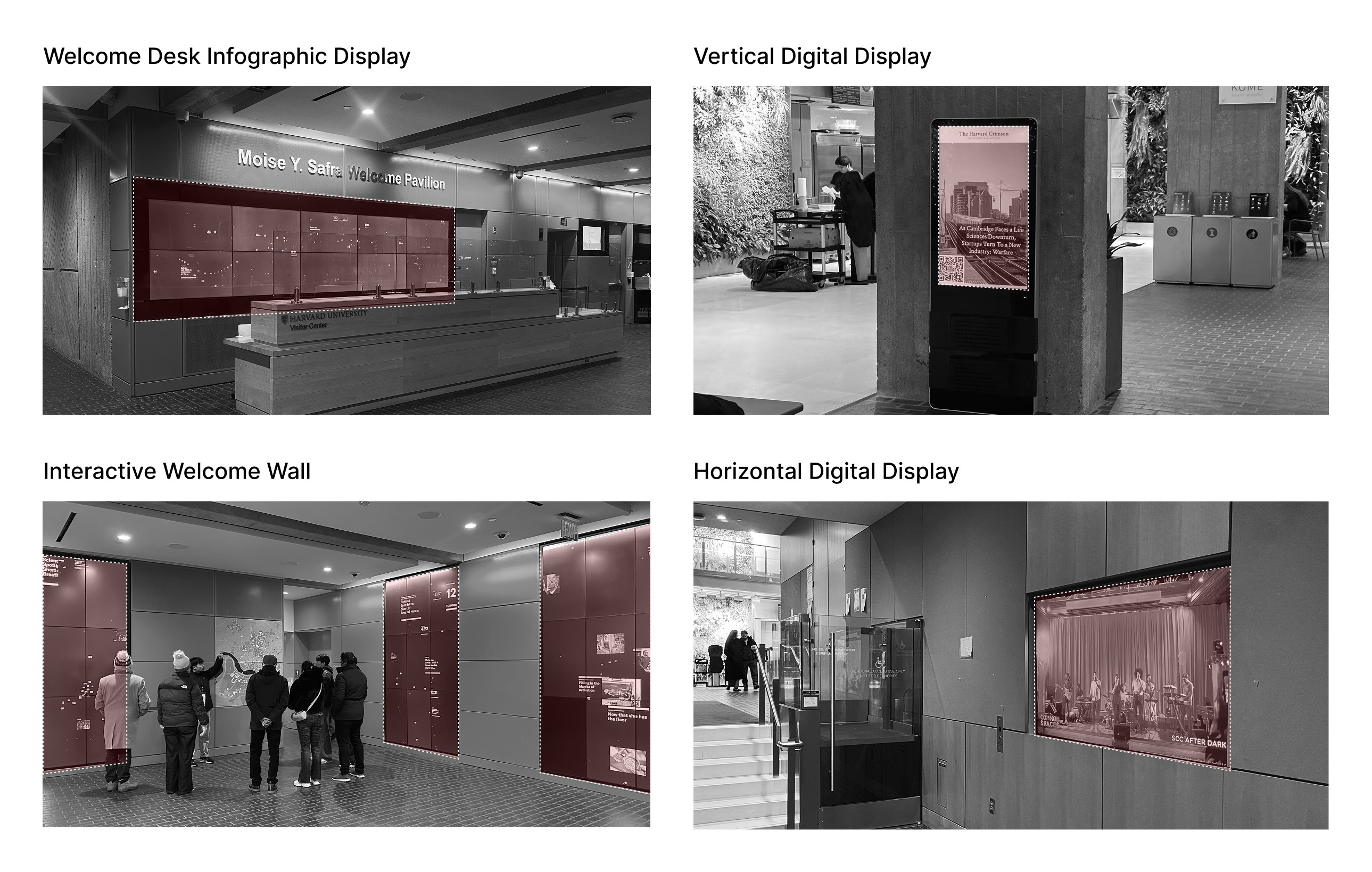
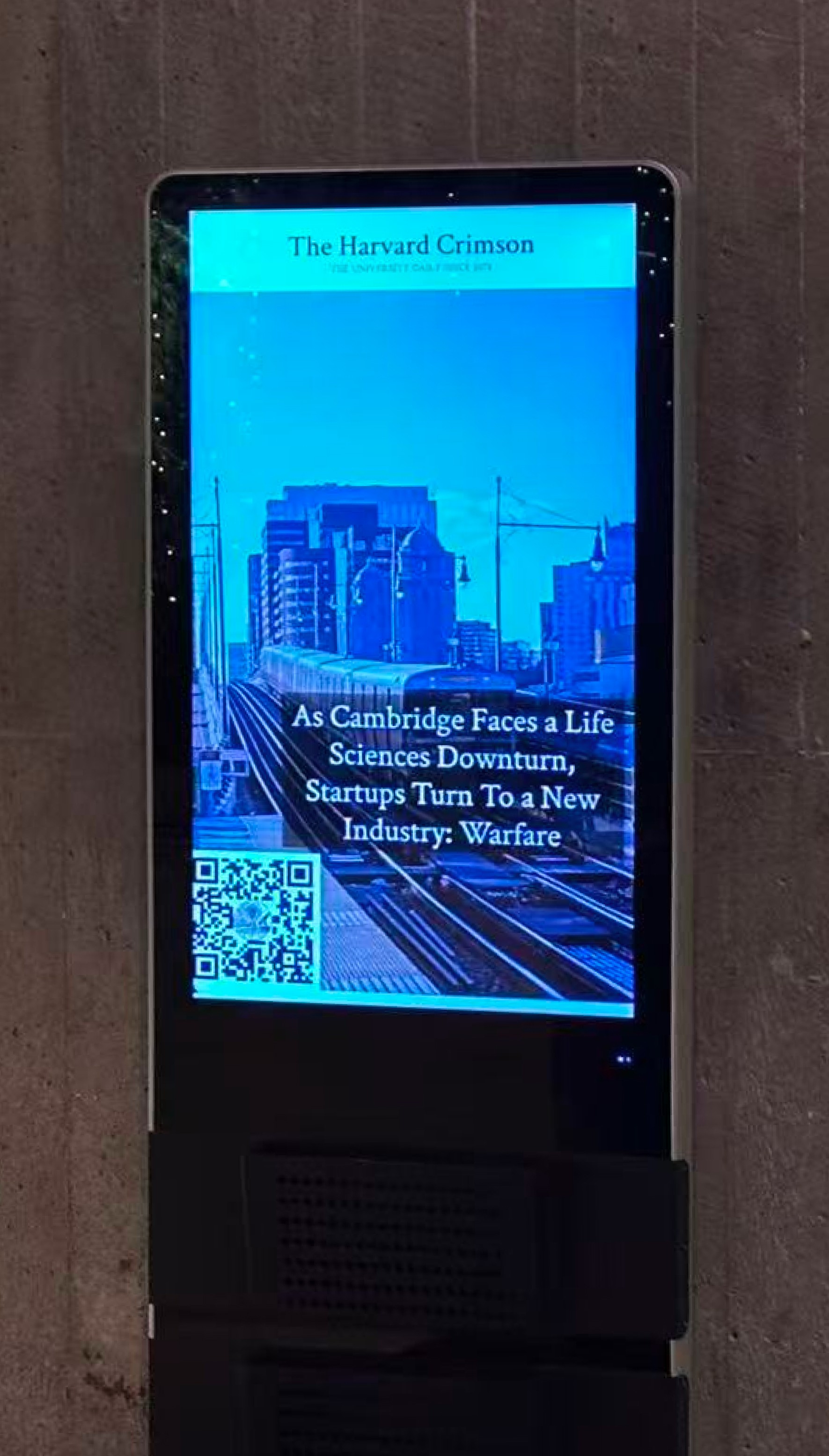
Public displays primarily show event information, yet the layouts are visually noisy, non-interactive, and difficult to parse, resulting in low engagement.
[ Vertical Digital Display ]
Lacking Functionality
01
Prominent screens are non-interactive with minimal content
02
Replacing them with interactive displays would improve engagement and clarity
[ Interactive Welcome Wall ]
Unclear Information Layout
01
Content is scattered and visually inconsistent
02
Users can’t easily tell what the screen offers or that it’s interactive
[ Interactive Welcome Wall ]
Unintuitive Interaction
01
Touch interactions feel sluggish and unresponsive
02
Slow loading breaks the exploration flow
(02) Outdated Mobile Experience
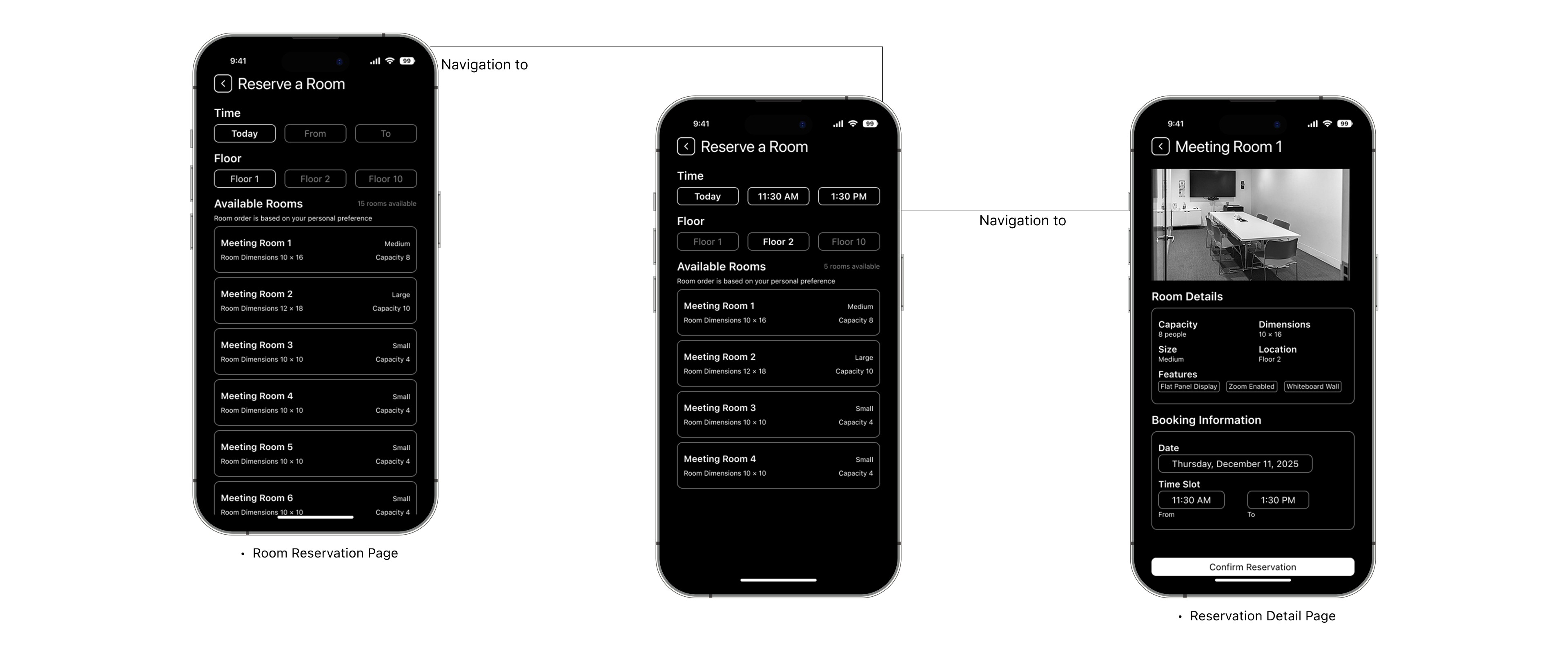
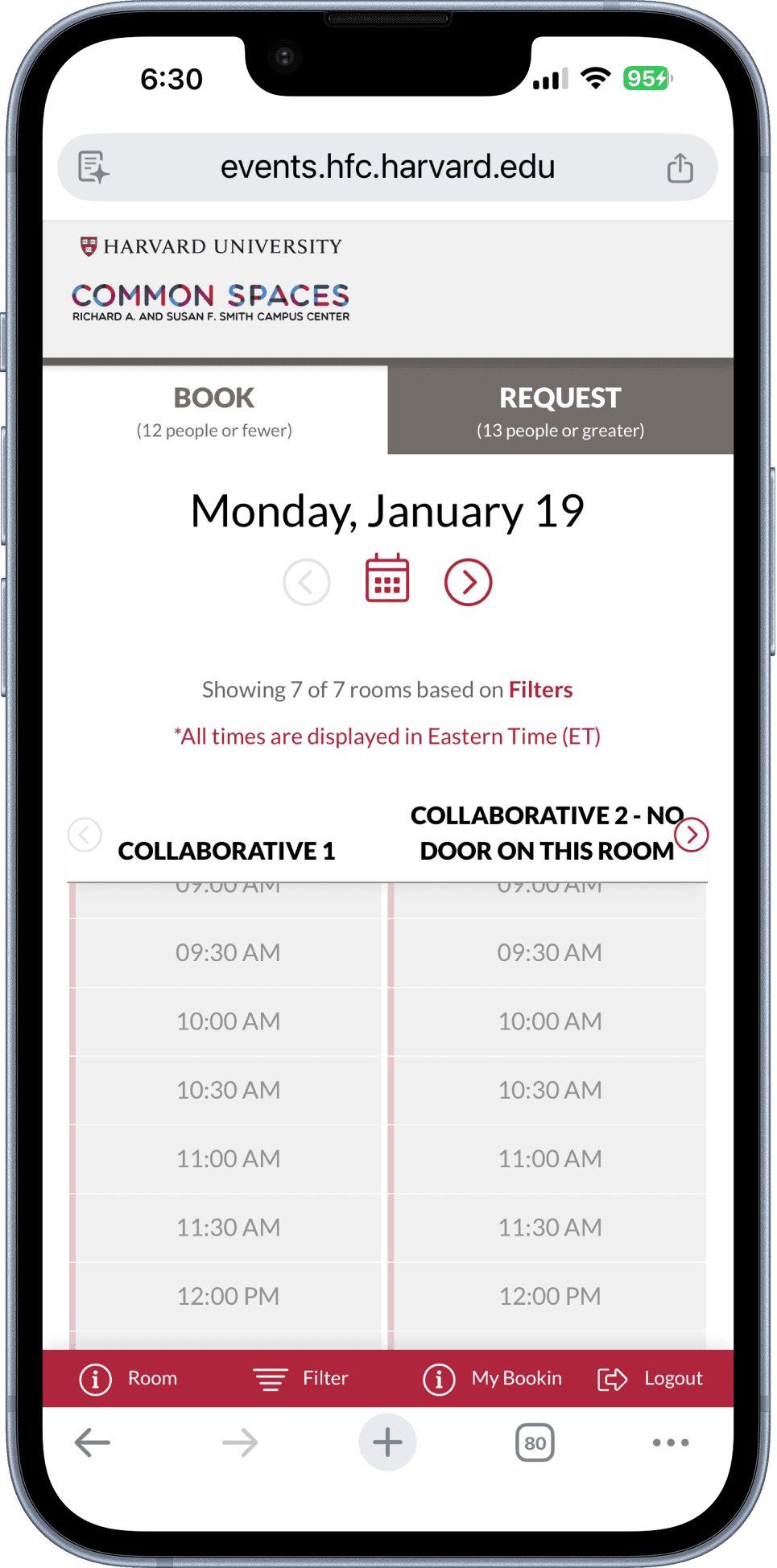
Meanwhile, room reservations and event details are handled through the Harvard Common Spaces portal, which suffers from outdated UI patterns and unclear information hierarchy, and poor mobile usability.
[ Room Reservation ]
Overloaded Availability View
01
Dense time grid makes availability hard to scan on mobile
02
Optimized for completeness rather than quick decisions
[ Room Reservation ]
Fragmented Booking Flow
01
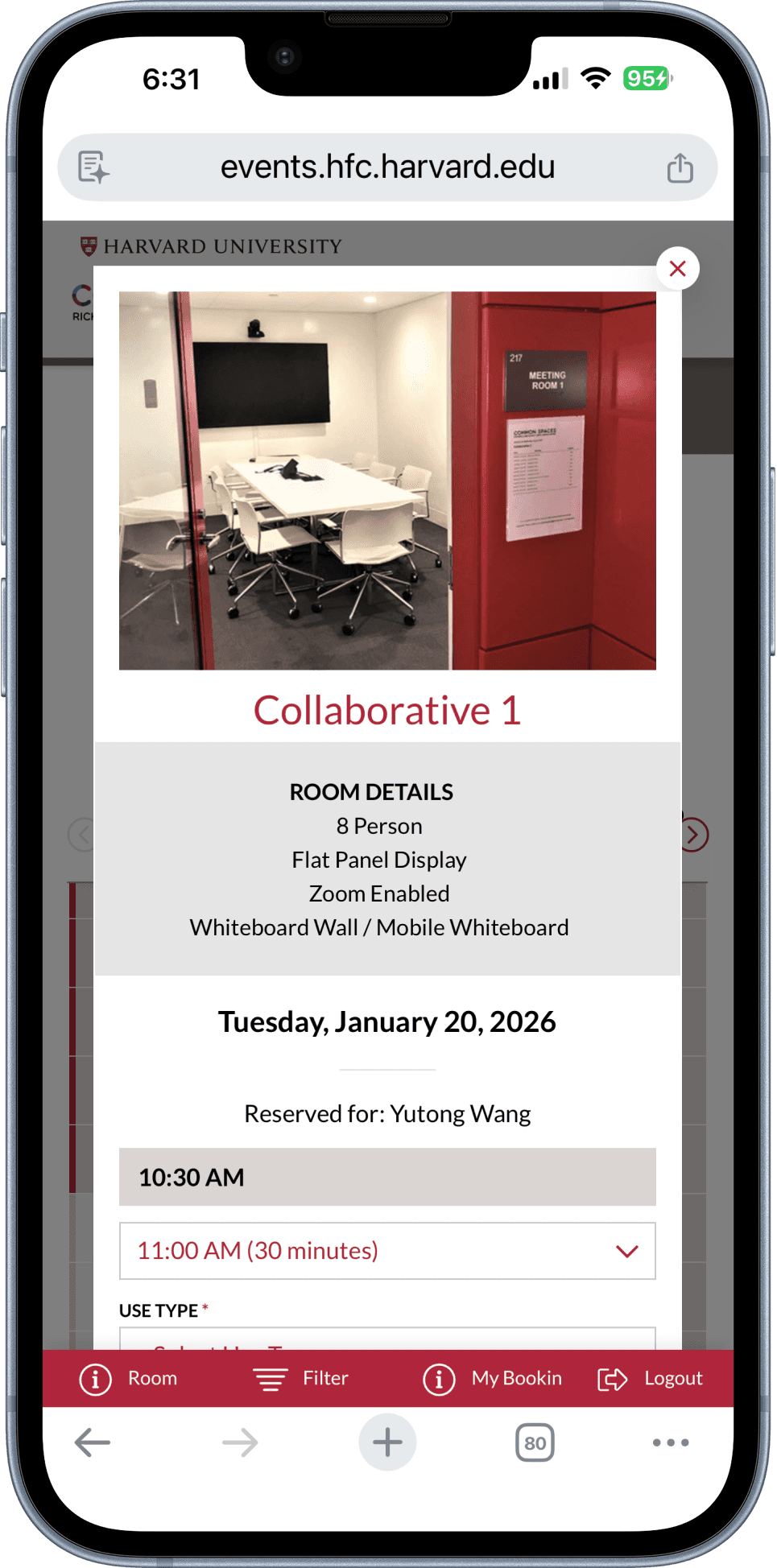
Simple booking requires excessive scrolling and effort
02
Information and actions are visually disconnected
[ Event Info Display ]
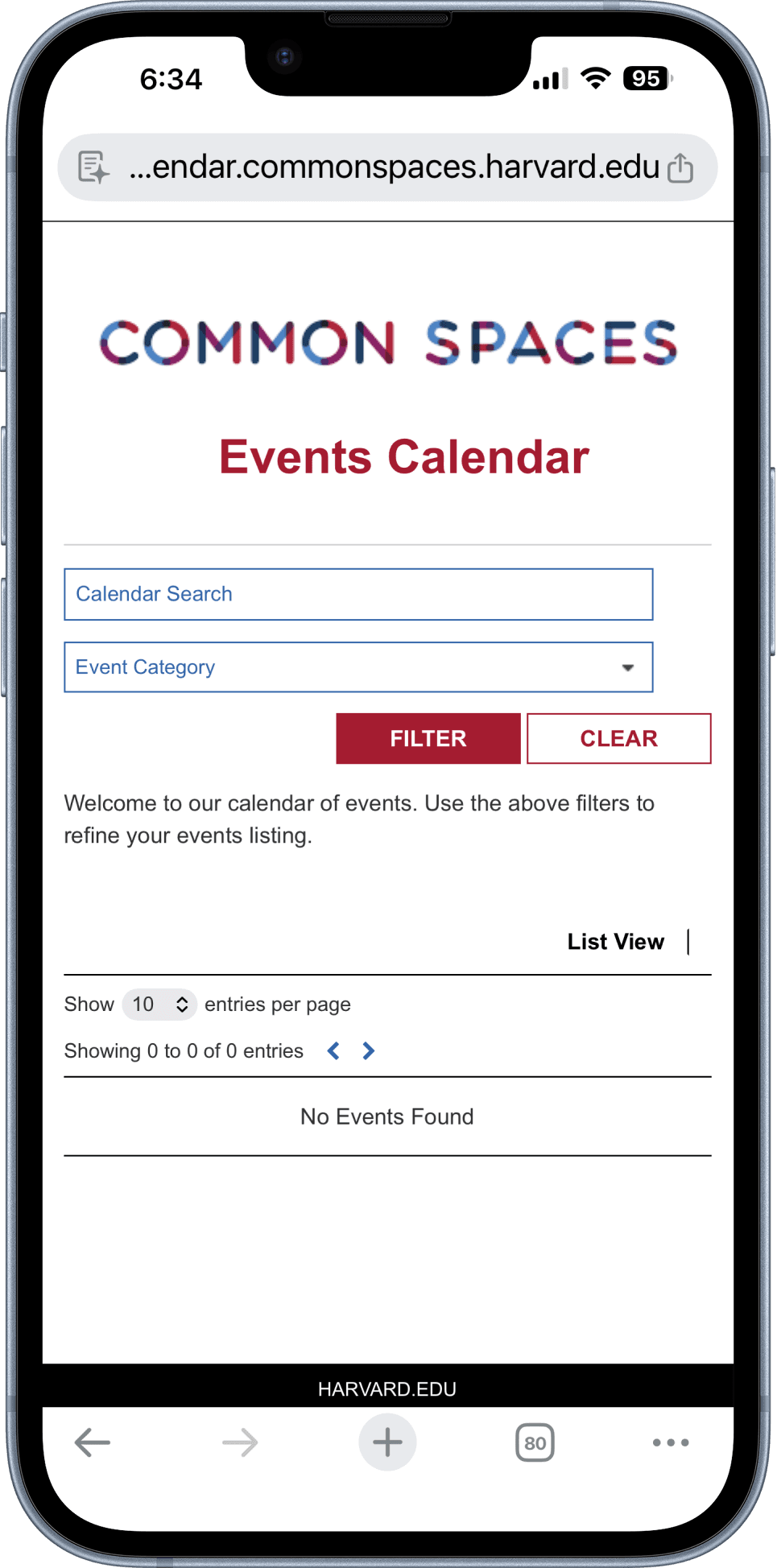
Uninformative Event Interface
01
Events presented as database entries not spatial experiences
User Research
We handed out surveys to 33+ Smith Center visitors to further confirm existing problems with the current digital infrastructure.
Survey Key Findings
(01) Visitors have low awareness on events, even though infos are displayed in multiple touch points.
01
More than 50% of respondents rarely heard about events.
02
44% of respondents found the visibility of event information low or very low.
(02) Visitors want more guidance and data to support their spatial navigation inside the Smith Center.
01
Around 70% of respondents would like to know crowd levels and noise levels for navigating.
02
Respondents rated low score on Smith Center's clarity of navigation signage.
Design Opportunities
Synthesizing insights from the problem analysis and user research, we identified two key design opportunities.
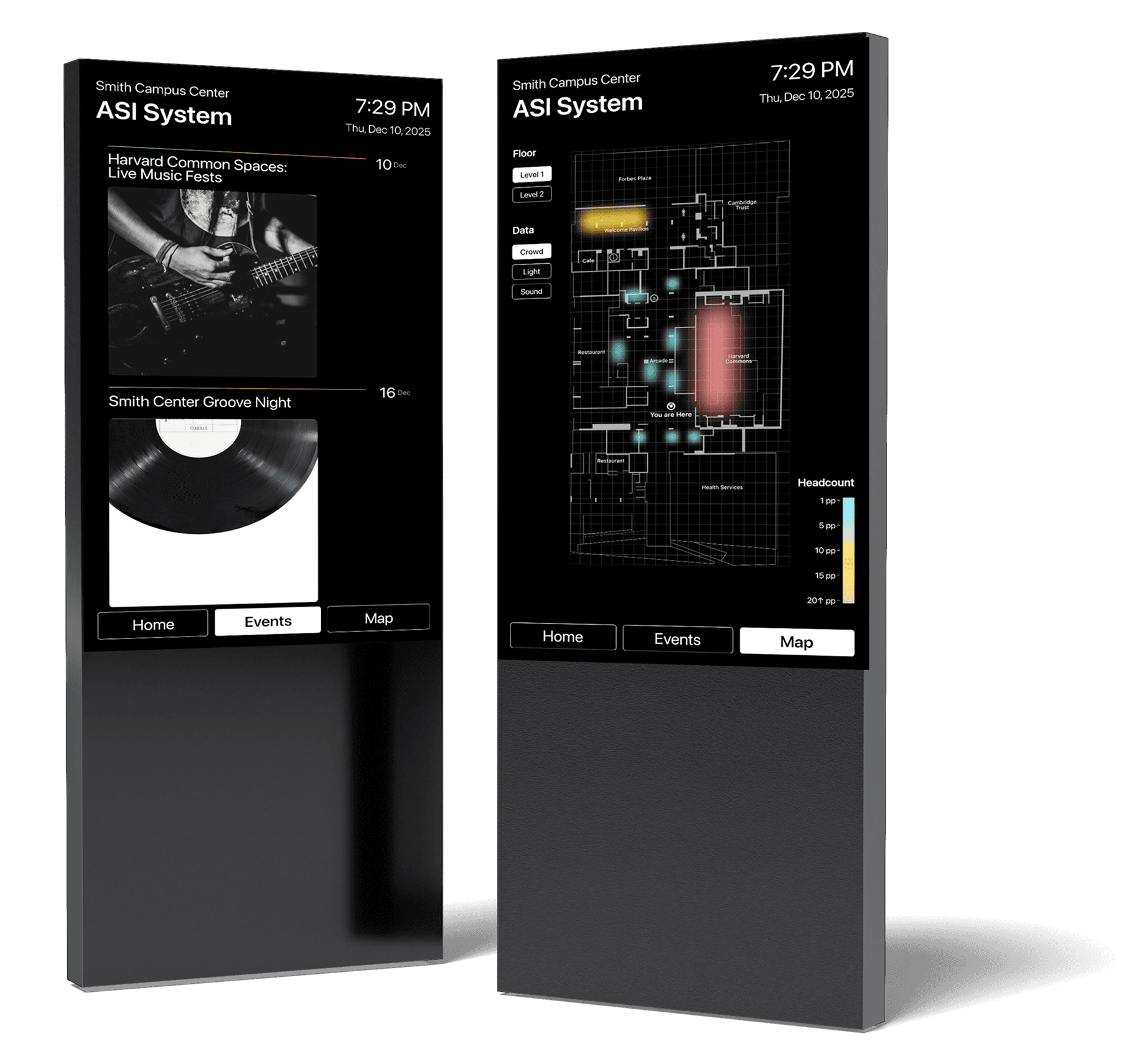
Design 1: Vertical Digital Display
An in-building spatial interface for quick orientation and decisions
This includes
01
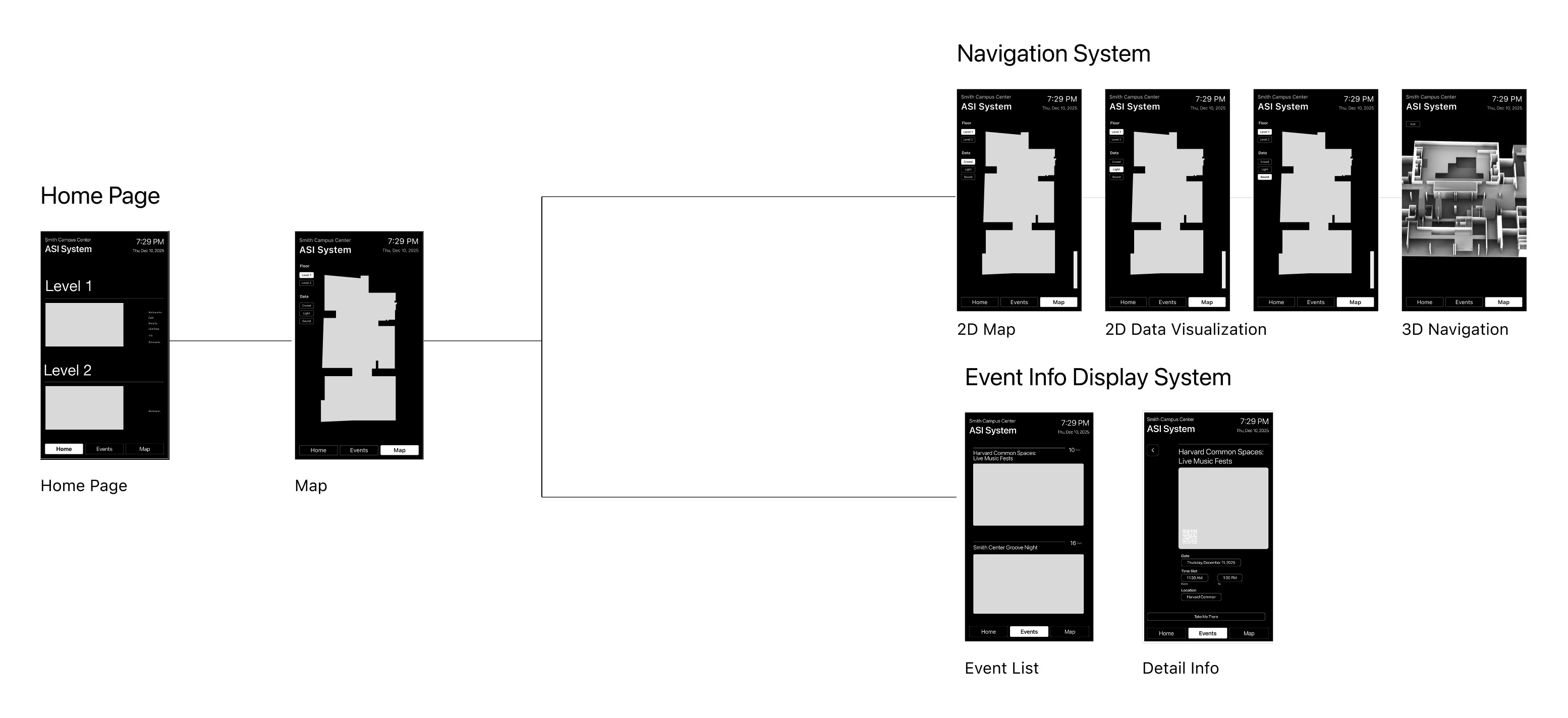
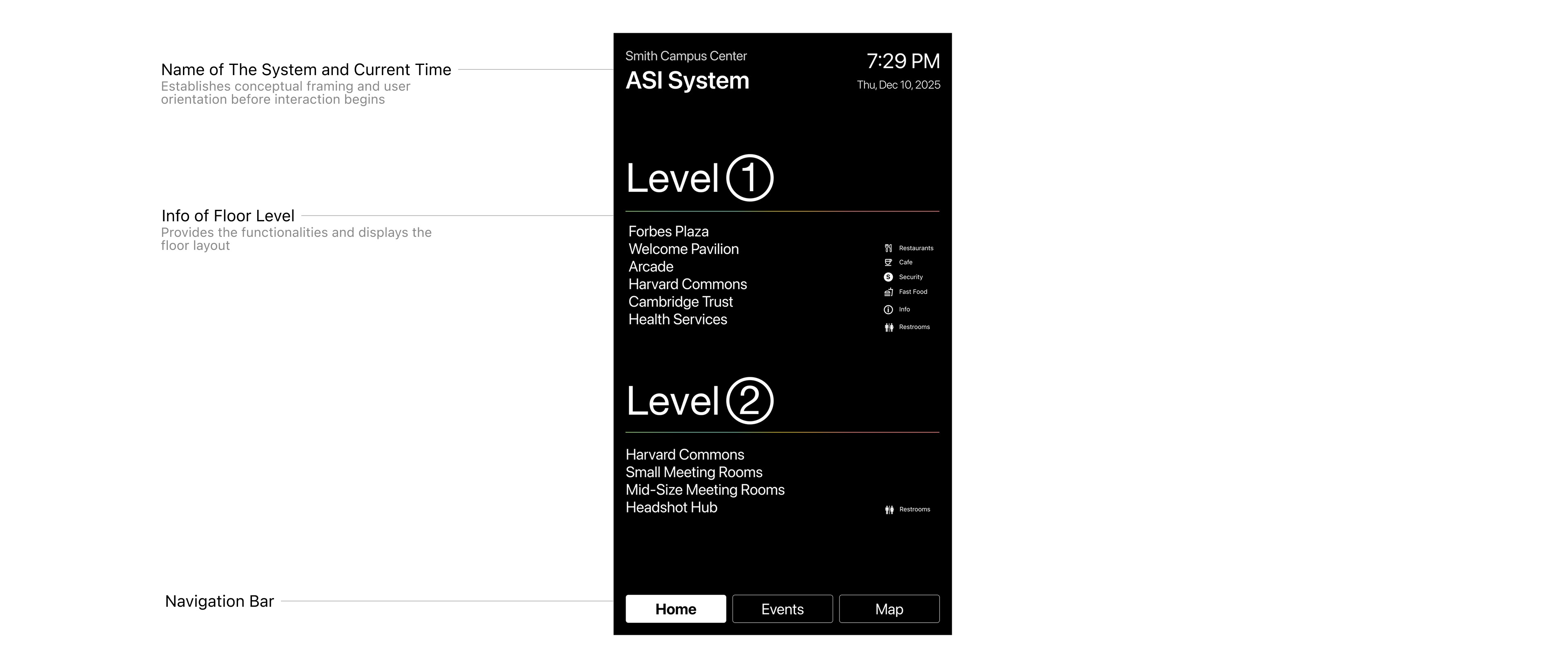
Adding a simple home page showing facilities by floor
02
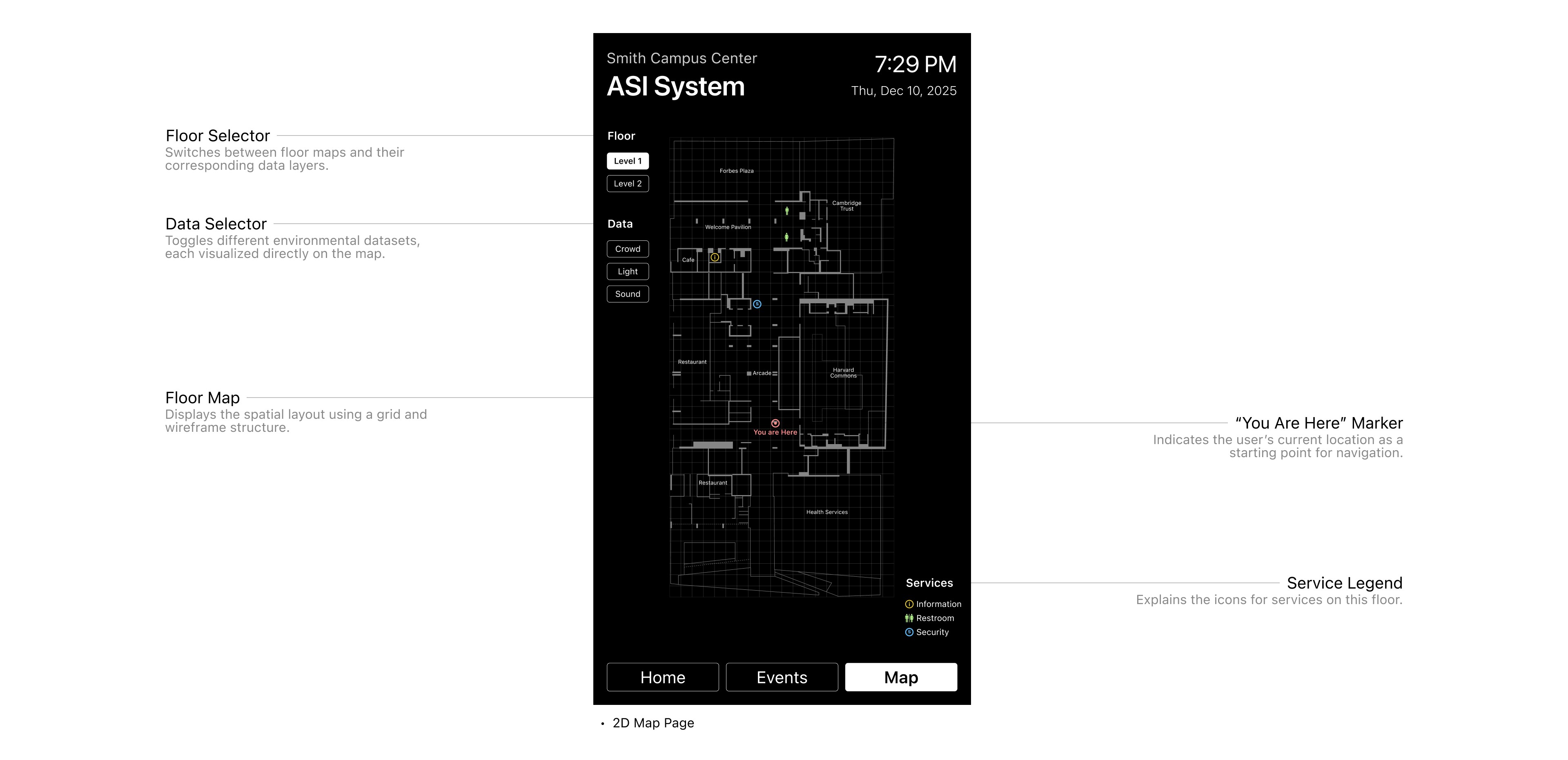
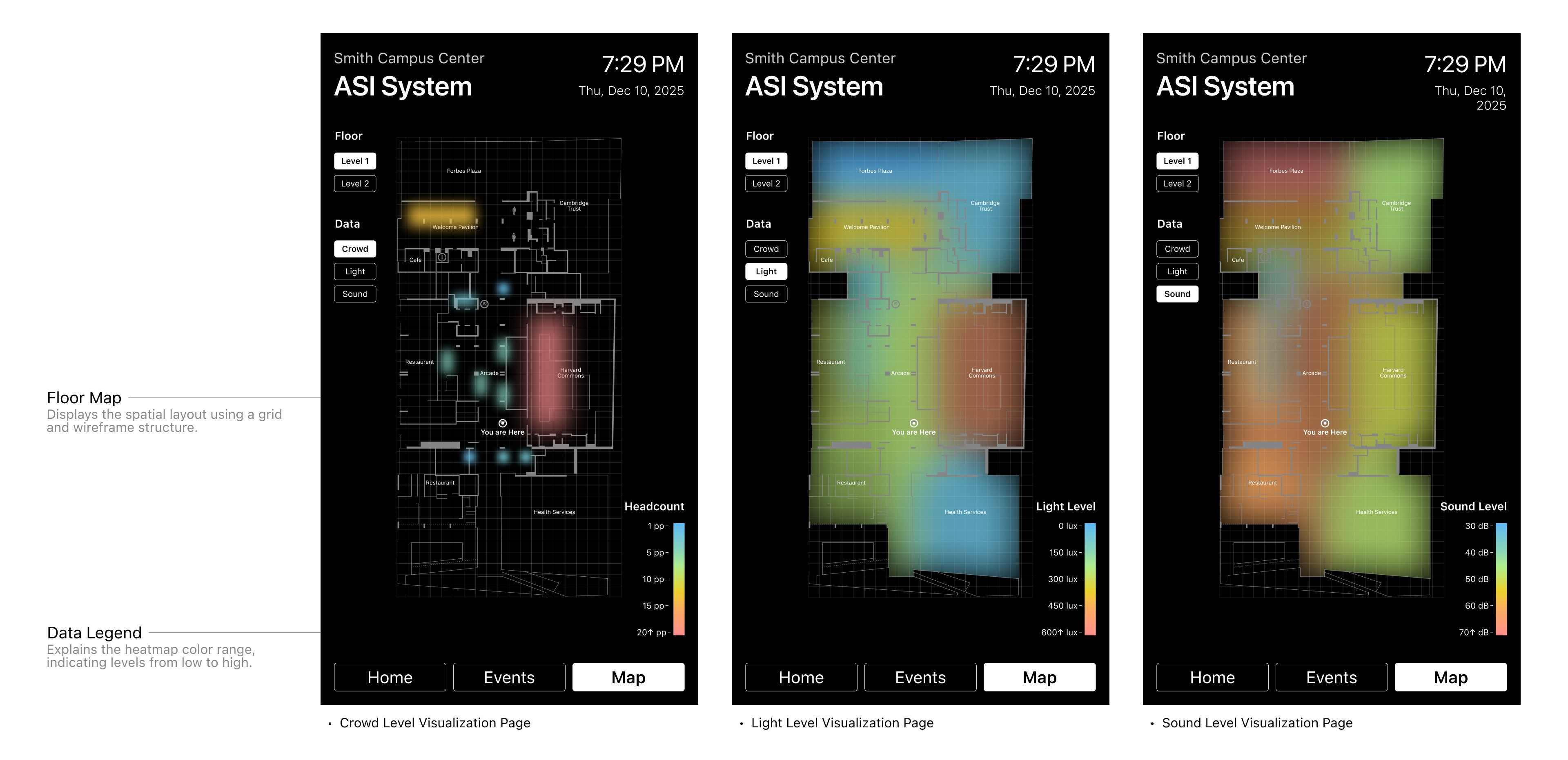
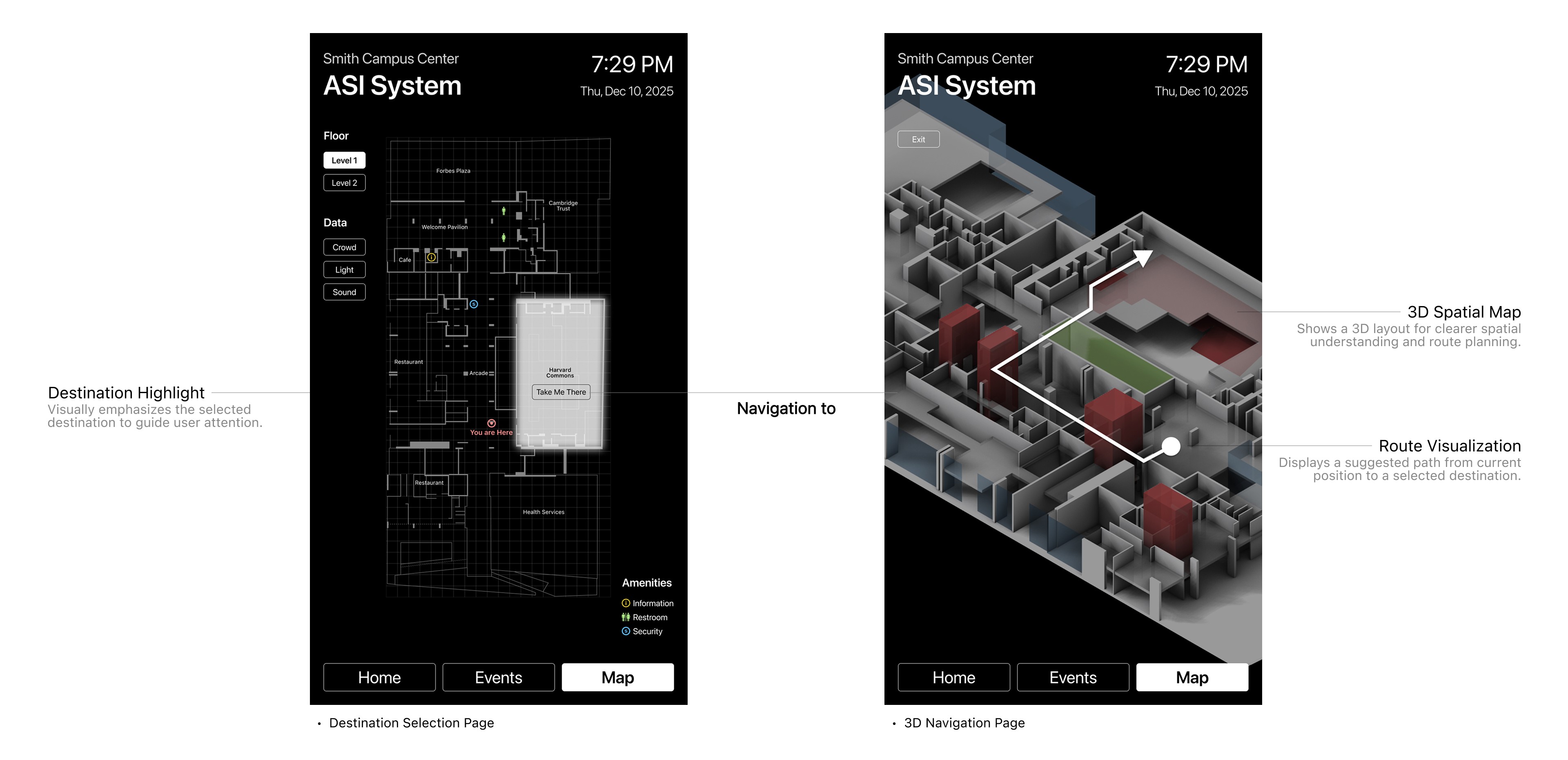
Adding an interactive map with data visualizations on crowd, noise and light levels and 3D navigation to help visitors find desirable spots for their activities
03
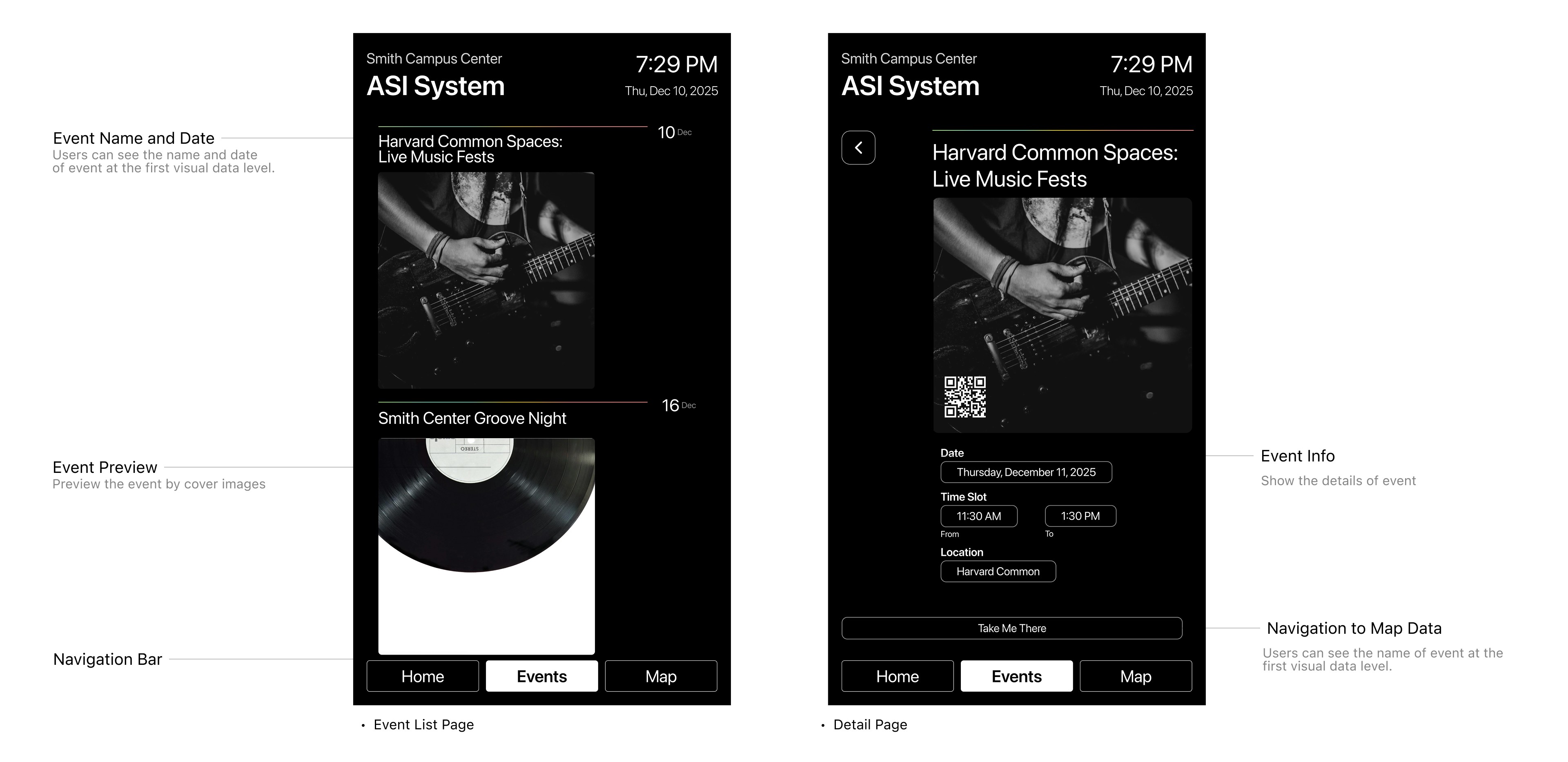
Redesigning the event info display for visual clarity
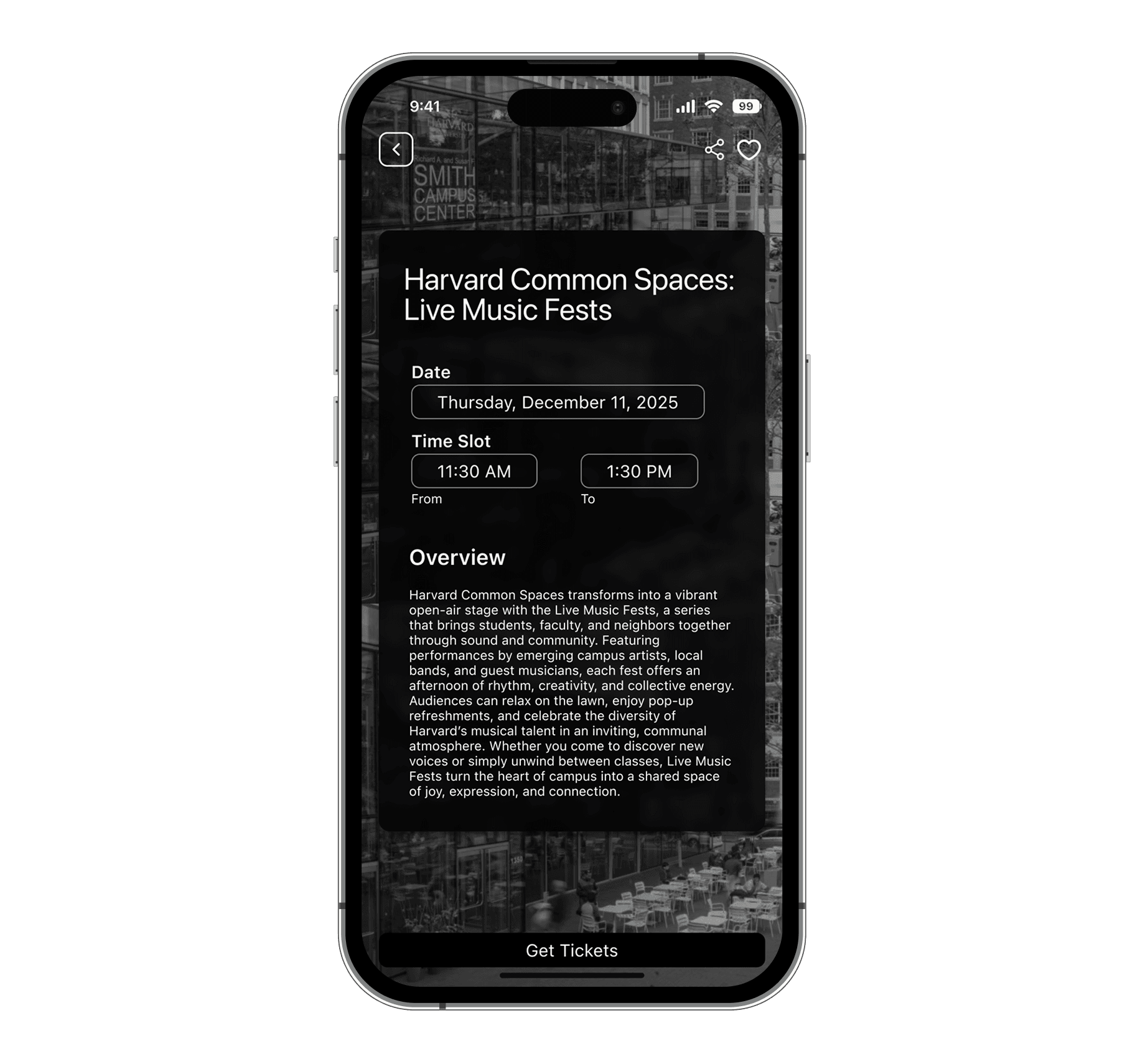
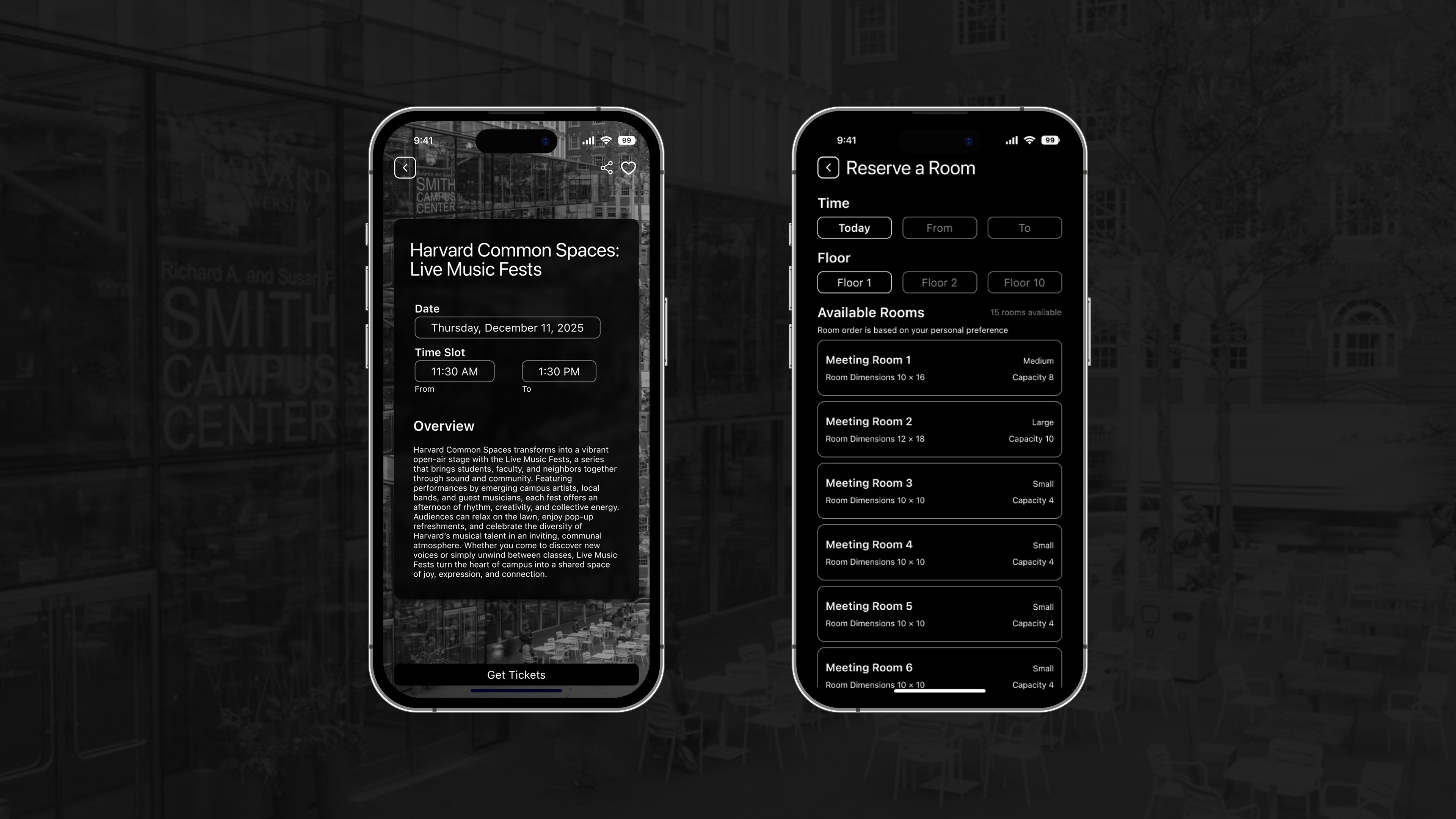
Design 02: Mobile App
A mobile interface for on-the-go spatial decisions
This includes
01
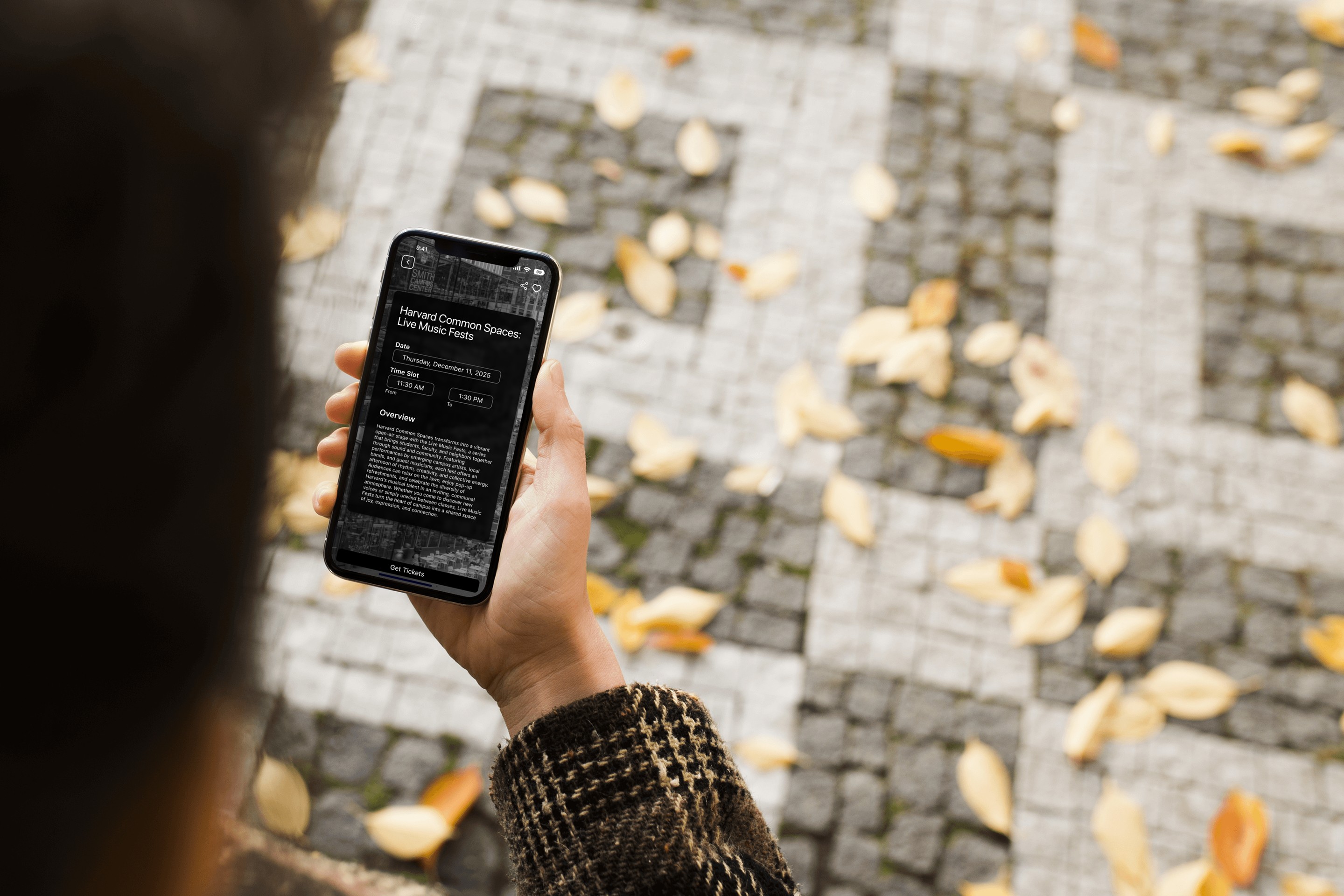
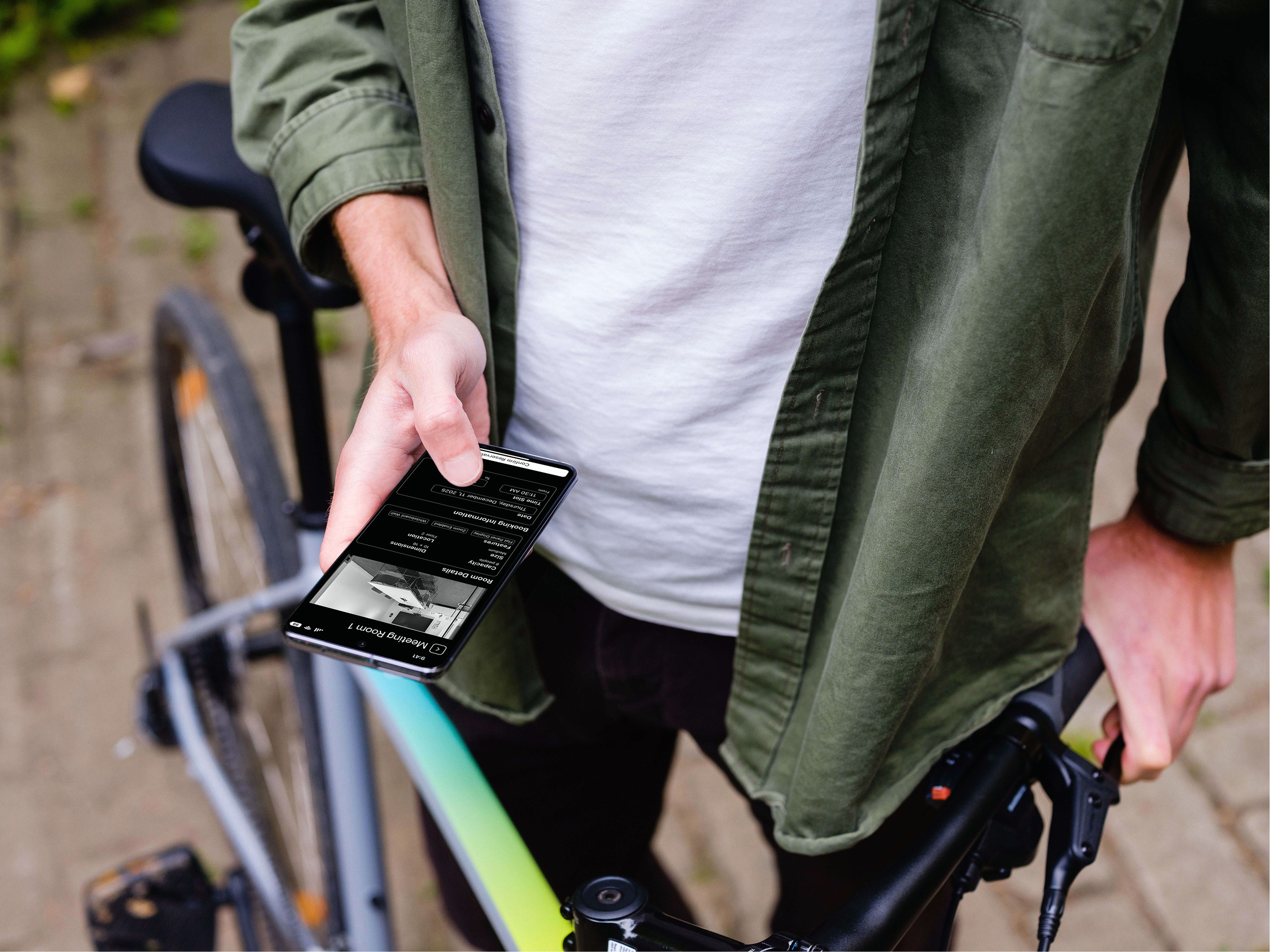
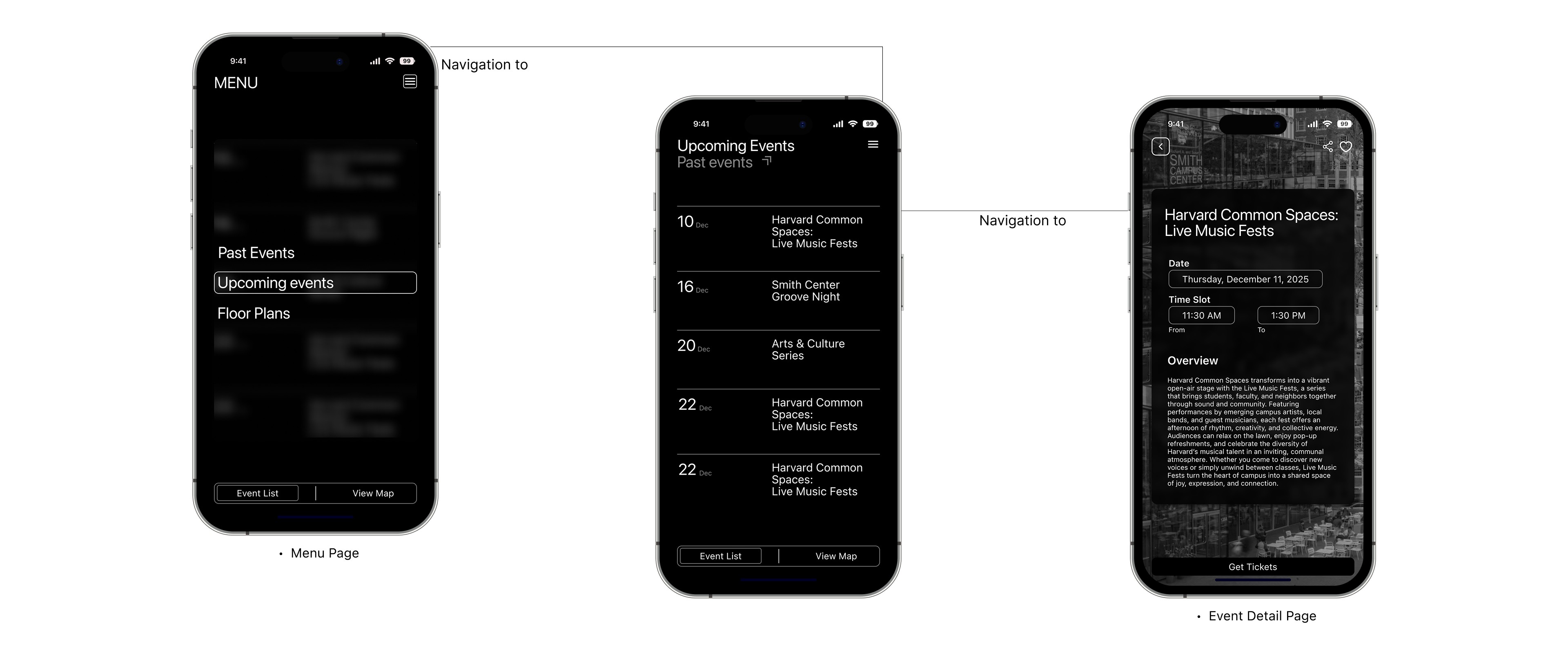
Redesigning the event info and room reservation pages for visual clarity
Information Architecture
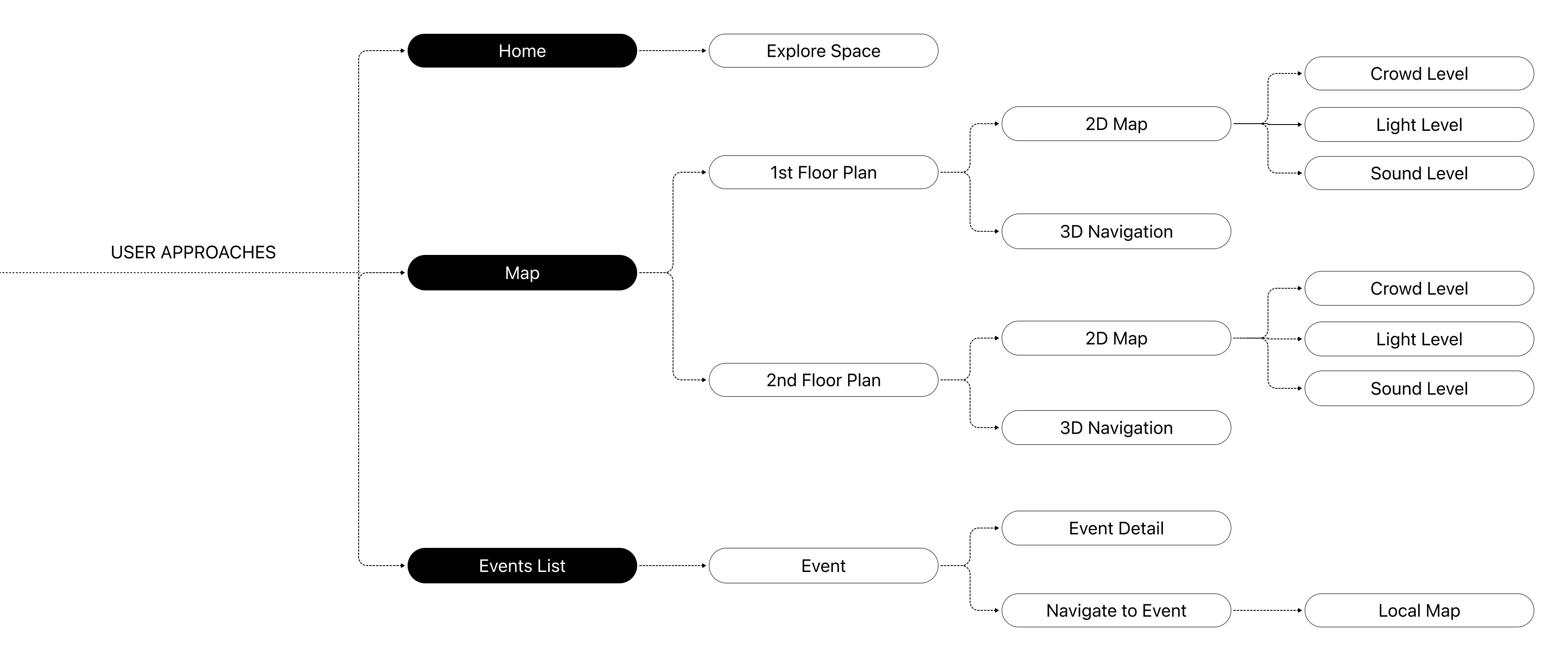
Low Fidelity Prototype
Design 1
Vertical Digital Display
Home Page
Event Info Display
2D Interactive Map
2D Data Visualization
3D Navigation
Design 2
Mobile App
Event Info Display and Booking
Room Reservation